How to Choose the Right Drawing Pencil

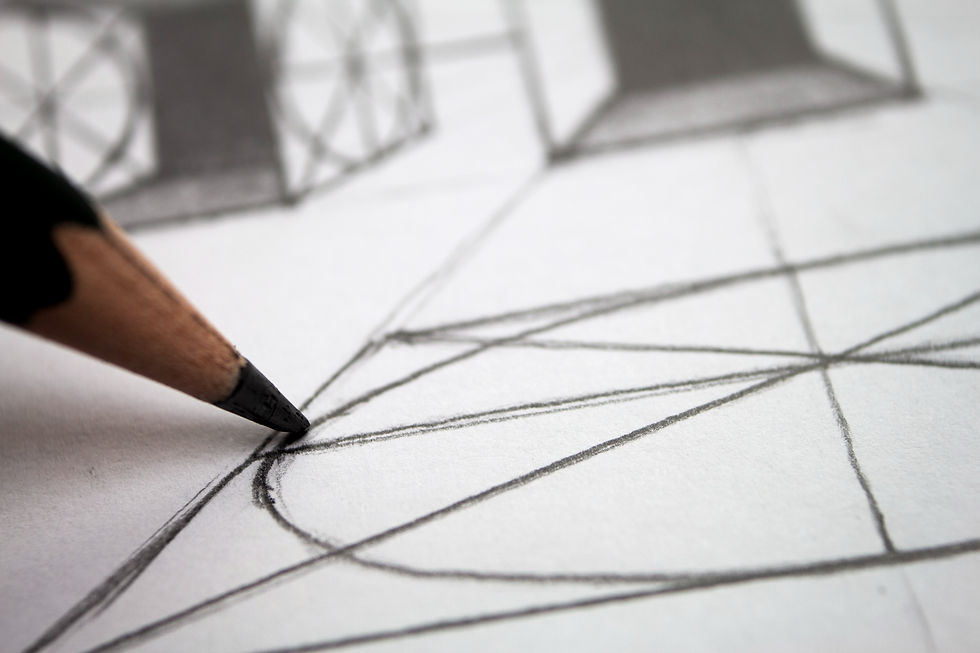
Pencils are one of the simplest tools in drawing, yet they offer a level of control, subtlety, and expression that few materials can match. They are inexpensive, portable, and responsive, making them a natural starting point for beginners and a lifelong companion for experienced artists.
But for many people, the different letters and numbers printed on a pencil can feel confusing. H, HB, B, 2B and 4H look like a code before they become useful. This guide explains what those markings mean, why they matter, and how to choose the right pencils for the marks and tones you want to create.
Modern drawing pencils do not contain lead. The name comes from a historical misunderstanding. In the sixteenth century, a large deposit of solid graphite was discovered in Borrowdale in Cumbria. People assumed it was a form of lead, and although the error was later recognised, the name “lead pencil” stayed. Early graphite was soft and crumbly, so it was wrapped in string or sheepskin before eventually being encased in wood.
Modern pencils are based on a method developed by Nicolas-Jacques Conté in the late eighteenth century. Instead of using natural graphite alone, the Conté process mixed graphite powder with clay to form a paste. This paste was shaped into thin rods and fired in a kiln. The ratio of graphite to clay determined the hardness of the pencil. More clay made a harder pencil. More graphite made a softer one. This mixture is still the basis of the modern grading scale.
Hard pencils, marked H, contain more clay. Soft pencils, marked B, contain more graphite. HB sits in the middle and is often considered a balanced, everyday grade. The number before the letter shows the degree. 2H is harder than H. 6B is softer than 2B. This scale provides a useful range, from pale, precise lines to dark, rich shading.
Understanding this grading system helps when deciding how to begin a drawing. Hard pencils are useful for light construction lines and technical details. They produce thin, pale marks that stay sharp and do not smudge easily. Their lines sit lightly on the surface of the paper. Soft pencils create darker, richer tones. A 2B pencil produces a deeper line than an HB. A 4B or 6B can create soft shadows quickly and respond to pressure with a wide range of values. These qualities make soft pencils useful for expressive work and for modelling form.
Pencils also interact with light differently depending on their softness. Hard pencils leave a thinner layer of graphite on the paper. Soft pencils leave a denser layer, which creates a darker tone, although very heavy graphite can catch the light and appear slightly shiny. A pencil with a broad tonal range, such as a good 4B, can create both delicate greys and rich darks simply by adjusting pressure. This variation in tone is what gives depth to a drawing. If a drawing appears flat, it may be because the same grade has been used in the same way throughout. Using a range of pressure, and sometimes a mix of grades, introduces subtle shifts that help forms feel more three-dimensional.
Tonal value sits at the heart of pencil drawing. Tonal value refers to the lightness or darkness of a mark. It is how we describe form, light, depth, and atmosphere. Choosing the right grade helps control these values with more intention. Hard pencils create the lightest values, suitable for early placement and faint edges. Mid-range pencils such as HB or 2B establish clearer lines and moderate tones. Soft pencils build the shadows and the full sense of depth. Understanding how each grade contributes to tonal structure allows you to draw with more clarity.
The full range of pencils can provide a simple workflow. Many artists begin with a hard pencil, such as 2H or 4H, to lay down the first gentle lines. These early marks can be refined as the drawing grows. As edges and forms become clearer, an HB or 2B can help to define mid-tones. For shadows and the deeper parts of a drawing, soft pencils such as 4B, 6B or 8B provide the necessary darkness and volume. Moving from light to dark in this way helps prevent overworking and keeps the drawing clean.
At the same time, it is not essential to use every grade. Many artists prefer to become deeply familiar with one pencil. For many years, I have used the same pencil for almost all my drawings: a Faber-Castell 9000 4B pencil. I use it because it gives me a wide tonal range without needing to change tools. With a sharp point, it can make a precise, controlled line. With a softer point, or with more pressure, it can create smooth shadows and a surprisingly deep darkness, even though it is only a 4B.
The tonal changes are gradual and responsive, which makes the pencil feel closely connected to the movement of the hand. I know how it behaves on Bristol Board, how it reacts to pressure, and how it lifts with the erasers I use. This familiarity removes a layer of decision-making. I do not have to stop and ask which pencil I need next. The marks come more directly from the drawing itself. Over time, the pencil has become almost an extension of my hand, allowing the process to feel more intuitive and fluid.
Different papers also influence pencil behaviour. A smooth, hot-pressed paper allows for fine, crisp lines as the pencil glides over the surface. A textured, cold-pressed paper holds more graphite, giving a grainier and more atmospheric mark. Choosing the right surface depends on the drawing you want to make. Architectural precision may suit a smoother paper. Soft tonal shading may benefit from a surface with more tooth.
Mechanical pencils behave differently again. Their thin graphite core remains the same width, making them ideal for consistent detail. They are widely used for technical drawing, planning and precise line work, but they cannot produce the same broad tonal range as a traditional wooden pencil. Clutch pencils, or lead holders, sit between the two. They hold a thicker piece of graphite that can be sharpened finely or used blunt for broader marks.
Other tools can complement pencils. Charcoal gives some of the darkest blacks available in dry drawing and is useful when strong contrast is needed. Graphite sticks cover large areas quickly and lend themselves to loose, expressive work. Kneaded erasers lift graphite gently for subtle adjustments, while standard erasers provide sharper corrections. Blending stumps or tissue can soften transitions, although too much blending can flatten the surface and remove the life of the mark.
Pencil makers such as Faber-Castell helped make graphite pencils smoother, darker, and more dependable. Historic brands such as Venus also became known for very soft drawing pencils. These developments gave artists a wider tonal range, from pale construction lines to rich shadows and deep blacks. Today, a reliable set of drawing pencils gives you access to that full range without needing many materials.
Although it is helpful to understand the grading scale, the most important pencil is the one that feels natural in your hand. Some drawings need the precision of an H pencil. Some need the flexibility of an HB or 2B. Others need the dark, generous tone of a 4B or 6B. Over time, you begin to sense which pencil is right for the mark you want to make.
Knowing how pencils work allows you to draw with more intention. Once you understand how hardness affects tone, texture, and depth, you can choose the right tool for the effect you want. This does not make drawing rigid. It simply gives you more control over the qualities of the marks you make.
The aim is not to master every grade. It is to understand the possibilities they offer. With a few well-chosen pencils and a clear sense of how they behave, drawing becomes more fluid, more expressive, and more enjoyable.
The Habit of Seeing: Book One is available now. Click Here to order on Amazon.
Circle Line Press in an imprint of Circle Line Art School.
Subscribe to The Drawing Blog for new posts and news by email.
The Drawing Blog by Tom McPherson, Circle Line Art School. Join my YouTube channel for free drawing tutorials here.


