The Habit of Seeing: Book One
A new book about attention, observation, and learning how to notice: Available to order here.

CIRCLE LINE PRESS
Books on drawing, creativity, and observation.
Circle Line Press publishes books on drawing, creativity and observation.
An imprint of Circle Line Art School.
Join the newsletter for drawing reflections and updates on new books.
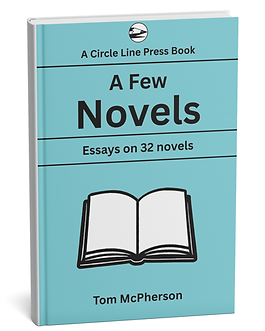
A Few Novels is a collection of 32 short essays about novels, reading, and the different ways fiction can stay with us. Each essay considers a particular book, looking at its characters, ideas, structure, atmosphere, and the experience of reading it. Rather than offering reviews or literary criticism in a formal sense, the book is a personal exploration of what makes certain novels memorable and why we return to them. Written for curious readers rather than specialists, it is an invitation to think more closely about novels and the strange, lasting relationship we form with the books we read.
A Few Novels is available to pre-order now.
The title will be released on 15th October 2026.
Available from

The Habit of Seeing: Book One is a reflective exploration of attention, observation, and how we learn to see the world more clearly. Through short essays, it examines perception, presence, and the choices that shape how we notice what is in front of us. This book is not a how-to drawing guide and does not teach techniques or exercises; instead, it focuses on the inner conditions that make seeing possible. It is written for artists and non-artists alike, offering a slower, quieter approach to understanding vision and awareness.
The Habit of Seeing: Book One is available now.
Available from

The Habit of Drawing: Fast and Slow explores drawing as a daily practice that balances momentum with attention. It looks at how quick, instinctive drawing and slower, more deliberate observation work together to build confidence, skill, and creative momentum over time. This book is not a technical manual or a collection of step-by-step exercises; it is a guide to building a sustainable drawing habit, developing mindset, and learning to trust the process. It is about showing up regularly and allowing drawing to become part of how you think and work.
The Habit of Drawing: Fast and Slow is available now.
Available from
Novels: Circle Line Press
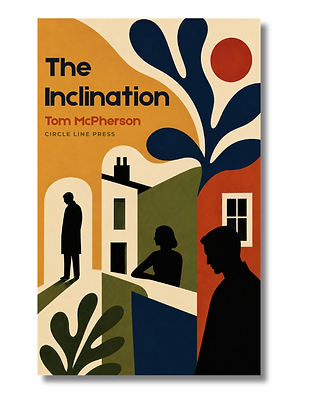
The Inclination: A Novel
The Inclination follows a small group of artists as they prepare a work whose precise nature remains undefined, yet quietly shapes every decision. Meetings are brief, routines deliberate, and progress measured through restraint rather than momentum.
Arnold, Michael, and Nancy move within a shared understanding, while an observant narrator remains at the edge of the group, attentive to language, gesture, and silence. Agreement is reached without emphasis, and authority settles without announcement.
As the work approaches readiness, effort gives way to care. Through precise, measured prose, The Inclination examines how people align themselves to a collective purpose, and how the smallest choices determine what is carried forward.
The Inclination is available now.
Available from
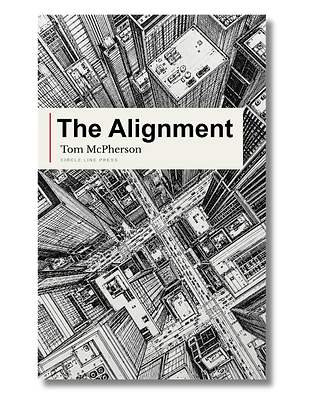
The Alignment: A Novel
A painter in London discovers that his work has stopped moving. Not through lack of talent, but through excess control. The structures he built to protect his practice have quietly become restraints.
A brief journey to New York reopens an unfinished relationship and exposes a deeper division between discipline and fear, structure and avoidance. What begins as a simple visit gradually reveals itself as a confrontation with authorship itself, with what it means to make work that does not retreat from its own consequences.
The Alignment is a restrained and deliberate novel about creative pressure, attention, and the unseen mechanics of artistic life. Moving through studios, streets, museums, and interior spaces, it traces a subtle but decisive shift: from observation to commitment, from explanation to action.
This is not a story about inspiration, success, or redemption. It is about alignment, the slow, exacting process of remaining present once structure is established, and of learning how to live with the mark that has been made.
The Alignment is available now.
Available from
Amazon UK
Amazon US
Waterstones
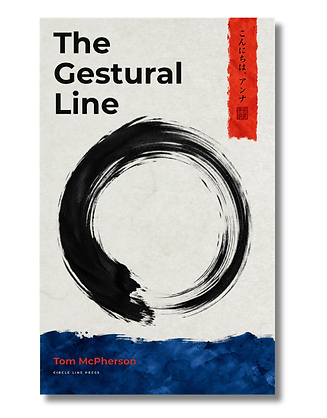
The Gestural Line: A Novel
In a foreign city governed by discipline and quiet order, a young outsider enters a studio where gesture is structure, not performance. What begins as training becomes an initiation into a system where movement, language, and loyalty carry equal weight.
The Gestural Line is written in restrained, measured prose and examines how aesthetic discipline can sustain itself without visible force, and how subtle adjustments accumulate into transformation.
At its centre, the novel explores atmosphere, how space shapes behaviour, how silence can protect or control, and how freedom within a system may be provisional rather than absolute.
ART BOOKS: Published by Rocky Nook
DRAWING AMAZING OPTICAL ILLUSIONS
Easy Lessons for Drawing 3D Trick Art Step-by-Step
Learn to draw stunning optical illusions step by step.
Create 3D drawings that leap off the page, no experience needed.
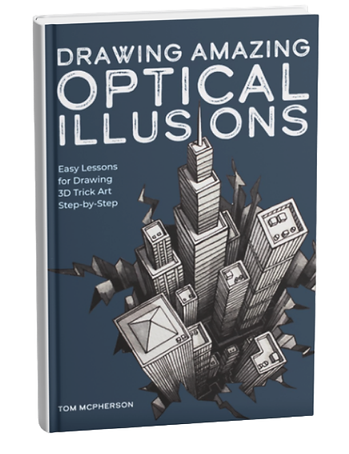
Drawing Amazing Optical Illusions is published by Rocky Nook.
Available from
Amazon UK
Amazon US
Waterstones
Create artwork that leaps off the page!
Drawing three-dimensional illusions doesn’t need to be complicated or reserved for advanced artists. In this inspiring guide, author Tom McPherson, founder of Circle Line Art School, shows you how to draw stunning optical illusions step by step, even if you’re a complete beginner.
You’ll start with simple shapes and build up to intricate, eye-catching designs using clear instructions and easy-to-follow methods. Learn how to create:
• Impossible Shapes — Illusions of forms that couldn’t exist in real life.
• Floating Shapes — Drawings that appear to hover above the paper.
• 3D Line Art — Dynamic illusions drawn on lined paper.
• Anamorphic Buildings — Realistic 3D drawings with dramatic distortion.
And much more!
Whether you’re looking to amaze your friends, explore a new creative skill, or simply have fun with drawing, this book will guide you from your first line to a finished 3D masterpiece.
Available in paperback and ebook formats.

Drawing Amazing Optical Illusions is available now.
Available from
Amazon UK
Amazon US
Waterstones
Free resources related to the book:
Circle Line Press:
I also publish books through Circle Line Press, my own small imprint for books on drawing, seeing, art, and fiction.