The Tactile Side of Drawing

Updated: Dec 20, 2025

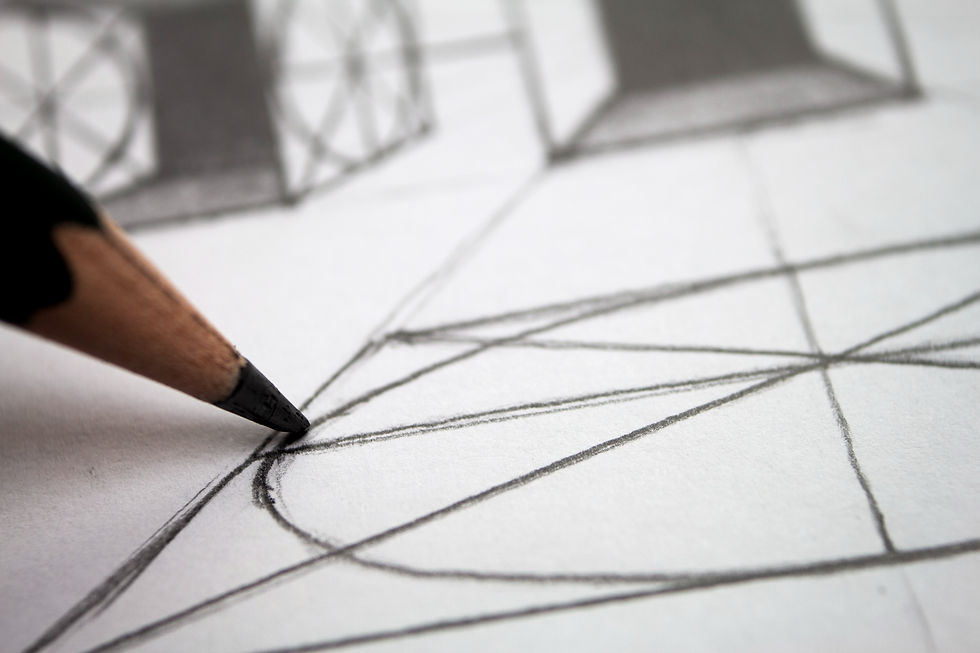
We often imagine drawing as something directed by the eye, as if sight alone guides the pencil across the page, but a drawing begins before the first mark is made: the faint smell of sharpened wood, the subtle weight of the pencil settling between the fingers, the surface texture of a new piece of paper beneath the hand. These tiny sensations suggest that drawing is not only a visual action but also a tactile and auditory one. Drawing is a form of contact.
When the pencil moves, unspoken thoughts seem to travel through the body onto the paper. There is a tactile sensation through the fingertips as graphite touches the surface and its grains break and deposit themselves against it. The line emerges not just by sight, but through these constant, subtle adjustments of pressure and balance communicated through the hand. This act of drawing becomes a feedback loop between sensation and creation.
Drawing by hand with a pencil, rather than in digital form, creates a unique honesty and directness. A pencil responds immediately to the smallest shift in grip, angle, pressure, and speed. A slight loosening of the wrist softens the edge of a contour. A slower movement deepens the darkness of a shadow. These changes are best when not calculated in advance; they are felt in motion through the repeated practice of drawing. The hand seems to think by exploring possibilities through touch, and the eye follows, learning from the physical experience.
Sound too becomes part of the experience. The rasp of a graphite pencil changes as the tooth of the paper wears it down, becoming a softer murmur. A stick of charcoal produces a grainier noise as it crumbles slightly on first contact. These subtle sounds trace the unfolding of the drawing over time, marking each shift in pressure and speed. Listening becomes another way of connecting, another entry point into letting the drawing unfold through trusting the physical process of drawing.
The accumulation of marks creates a structure of delicate imperfections. Slight hesitations, tremors, and variations in each mark's tone record the body’s involvement in every stroke. Over time, these traces form a memory of the gestures that shaped them. To return to a drawing later is to be reminded not only of what was seen, but also of how it felt to see it: the pace of the hand, the slowness of attention, the quiet concentration gathered around the point of contact. If you return to a drawing in a different state, it will change more than it will continue, as the earlier feeling has passed.
In this tactile dimension, the act of drawing becomes more than depiction. It is a way of inhabiting the world through the senses, of grounding perception in the immediate and the real. The pencil becomes an extension of the hand, and the hand becomes an instrument of thought, discovering form by touching it into being. The line, in all its variations, becomes a record of attention made visible.
Drawing holds us close to the surface of things, to their textures and edges, to the confidence and hesitations of the hand as it follows what the eye perceives. One mark at a time, the practice of drawing brings us back into sensory contact with the world.
The Habit of Drawing: New Book Available Now
If you would like to explore my new book on developing a creative drawing habit, The Habit of Drawing: Fast and Slow is available to order now as both a book and an ebook.
You can find full details in all good bookshops and purchase links at: www.circlelineartschool.com/the-habit-of-drawing.
Circle Line Art School Blog
A blog by Tom McPherson, founder of Circle Line Art School. You can subscribe to The Circle Line Art School Blog for new posts and news by email.
You can join my YouTube channel for free drawing tutorials here: Circle Line Art School YouTube Drawing Channel.